

Pizza Ready!
Supercent, Inc.
I approached Pizza Ready! as a quick management game rather than a serious business simulator, and that distinction matters. You run a pizzeria, respond to waiting customers, and gradually try to make the operation smoother. The appeal is immediate: there is always a small task in front of you, and completing it gives the feeling that the restaurant is moving again. I found it easy to understand within minutes, but getting the most from it requires more than simply tapping whatever looks busiest.
Developed by Supercent, Inc., this free simulation game is aimed at a broad audience. It is rated Everyone, works on devices running Android 6.0 or later, and has reached over 100 million installs. Its average rating sits at 4.3 from around 2.1 million ratings, which matches my overall impression: the basic loop is accessible and satisfying, although players who want a deep restaurant-management model may eventually find it light.
Running the restaurant means choosing what deserves attention first
The first useful lesson is that a crowded pizzeria is not automatically the biggest problem. A customer waiting at the front is visible, but a neglected preparation or service task can create a longer chain of delays. I learned to look at the whole flow before acting: who is waiting, which part of the restaurant is slowing progress, and whether my next action will solve a bottleneck or only make the screen look tidier.
Related News

How Android and iOS Updates Transform Pizza Ready! Gameplay
How Pizza Ready! Turns Restaurant Pressure Into Mobile Simulation

Jurassic World: The Game Is the Better Dino Tycoon for Strategic Players
That gives the game more decision-making than its simple presentation suggests. When several things need attention, I prefer to fix the task that affects the greatest number of customers. Serving one person can feel rewarding, but restoring a blocked part of the operation may be more valuable over the next few moments. This is a small planning habit, yet it changes the experience from random tapping into basic queue management.
The game is especially comfortable in short sessions. I can open it while waiting for a coffee, complete a few restaurant tasks, and stop without needing to remember a complicated story or a large map. It also works for players who enjoy watching a small business become more organized without committing to a long strategy campaign. The controls and objectives are approachable enough for casual players, including younger users who like food-themed games and simple progress.
Related News

Why WhatsApp Messenger Still Makes Everyday Communication Feel Easy

Threads in Real Life: Who Should Join, Lurk, or Leave

How SHEIN Turned Shopping Into an Endless Content Feed

How to Make Fortnite Feel Smarter on Mobile

Should You Switch to Microsoft Outlook on Mobile?

Why Gallery Keeps Pulling Users Back
However, I would not choose it as a substitute for a detailed tycoon game. The focus is on immediate restaurant activity and upgrading the feeling of progress, not on building a spreadsheet of suppliers, staffing contracts, menus, rent, or long-term finances. If your favorite part of simulation games is comparing complex statistics, this may feel closer to an accessible idle-management experience than a full economic model.
Small choices become more important when the shop gets busy
One practical approach is to avoid spending every reward the moment it appears. I found it more useful to think in stages: first improve whatever helps the current flow, then save enough momentum to handle the next increase in pressure. An upgrade that looks attractive in isolation may be less useful than one that removes a recurring delay. The best choice depends on what is currently holding the pizzeria back.
This is also where the game rewards a little patience. If I rush through every available action, I may create the impression of speed without improving the underlying rhythm. Taking a brief look at the restaurant before tapping helps me decide whether I should serve, prepare, clean up, or improve the operation. That pause is not dramatic, but it prevents wasted movement and makes the session feel more controlled.
Gallery
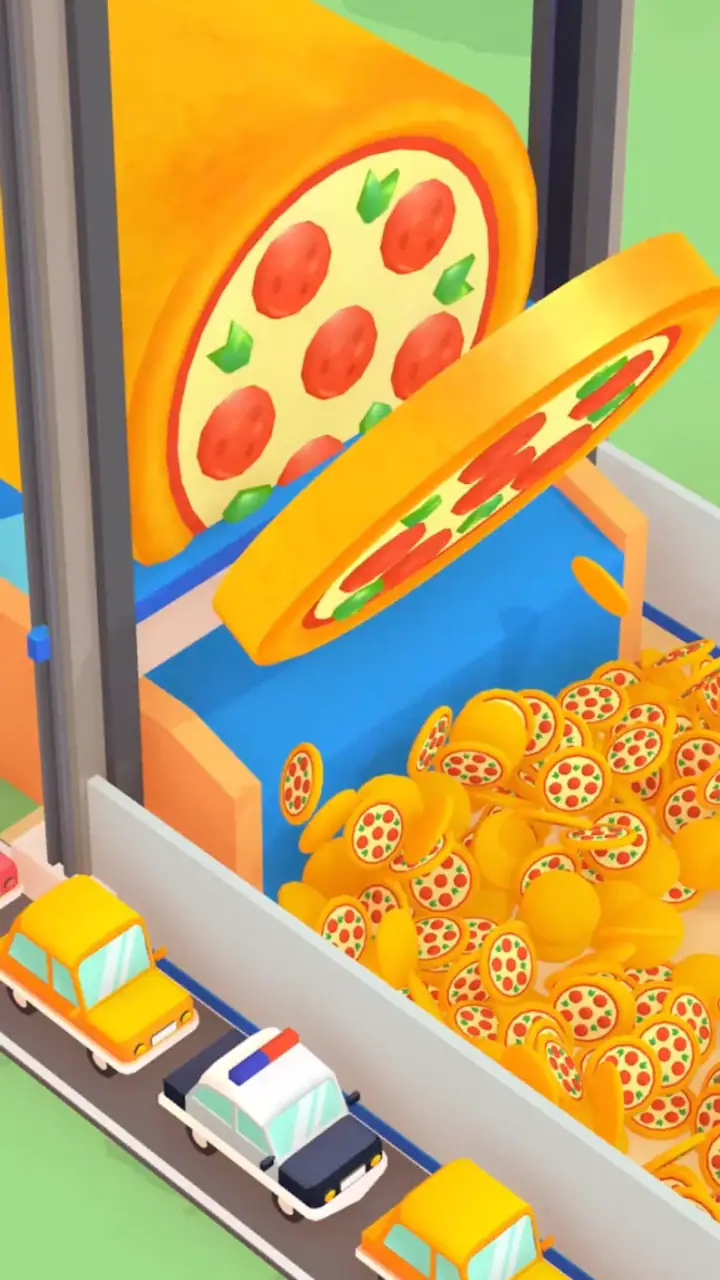
For an everyday example, imagine playing during a ten-minute break. At the start, the restaurant seems manageable, so you handle the most obvious customer requests. A few moments later, the waiting line grows and another part of the workflow becomes the real source of delay. Instead of continuing to serve one customer at a time, you shift attention to the obstruction. That change of priority is the kind of small decision that makes a short session satisfying.
Risk, reward, and the cost of playing too quickly
The reward structure encourages constant activity, but constant activity is not always the same as good management. I enjoyed the sense of improvement when a decision made the restaurant feel faster, yet I also noticed that the game can tempt me into chasing immediate results. The more useful question is not “What can I complete right now?” but “What will make the next sequence easier?”
That distinction creates a modest risk-and-reward layer. Spending resources early can make the current restaurant more comfortable, while saving them can support a more meaningful improvement later. Neither approach is always correct. If the current operation is struggling, delaying every improvement is counterproductive. If everything is flowing reasonably well, impulsive spending may leave me less prepared for the next challenge.
I recommend using a simple rule: invest in the part of the restaurant that repeatedly interrupts progress, not merely the part that is easiest to notice. This is one of the more useful habits I took from the game. It applies whether I am playing for a few minutes or settling into a longer session, and it reduces the sense that progress depends only on tapping quickly.
The free-to-play structure is worth considering before installing. The game is free, with in-app purchases ranging from $0.99 to $49.99 per item. I can enjoy the basic experience without treating purchases as mandatory, but players who dislike any pressure around optional spending should approach it carefully. I would avoid buying anything during a rushed session and first decide whether the purchase improves a problem I actually have or simply accelerates progress I am already enjoying.
That approach is particularly important for younger players. The Everyone rating makes the game broadly suitable in terms of age presentation, but a parent may still want to discuss spending before handing over a device with payment access. The sensible boundary is simple: play first, understand the normal pace, and only then decide whether optional purchases fit your expectations.
Planning for the next rush instead of only clearing the current one
My favorite strategic adjustment is to plan one step ahead. When the pizzeria is calm, I use that time to improve the condition of the operation rather than waiting for a crisis. When it is busy, I focus on restoring flow. This creates two different modes of play: preparation during quiet moments and triage during crowded ones.
That rhythm also helps with the game’s main limitation. Because the individual actions are straightforward, the experience can become repetitive if I treat every session exactly the same way. Changing my focus between immediate service, bottleneck removal, and saving resources gives the familiar loop more texture. It does not turn the game into a complex simulation, but it makes my decisions feel less automatic.
Another useful trade-off is choosing between visible progress and operational progress. A visible improvement can make the restaurant feel more rewarding right away. An operational improvement may be less exciting but can reduce friction across many later actions. I generally favor the second option when I expect to keep playing, while the first is perfectly reasonable when I only want a quick, cheerful session.
How the experience changes over time
At the beginning, the attraction comes from learning the restaurant’s rhythm. I am not thinking several stages ahead; I am simply discovering what needs attention and enjoying the quick feedback. This opening is one of the game’s strongest points because it avoids overwhelming me with systems before I understand the basic purpose of the pizzeria.
After more time, the challenge shifts. The novelty of serving customers is no longer enough by itself, so the quality of the experience depends on whether I continue making deliberate choices. Players who enjoy optimizing a routine may stay interested because they can refine how they respond to pressure. Players who need a constantly changing story, deep customization, or major strategic surprises may feel the loop has reached its limit sooner.
I would describe the long-term depth as practical rather than expansive. There is enough room to think about priorities, timing, and resource use, but I would not expect the layered complexity found in heavyweight management games. That is not a flaw for the intended audience. In fact, the lighter design is why I can recommend it to someone who wants a relaxing simulation without a large learning curve.
The current version is 51.2.0, and the game’s large audience suggests that it has broad appeal. Still, popularity does not change the central trade-off: the more familiar the restaurant loop becomes, the more important personal goals are. I get more from it when I set a small objective for myself, such as improving the busiest part of the workflow or completing a session without spending impulsively.
Compared with ordinary casual time-fillers, it gives me more agency because I am deciding what to prioritize rather than only matching items or waiting for a timer. Compared with traditional restaurant tycoon games, it is quicker, friendlier, and far less demanding, but also less analytical. Compared with idle games, it feels more active because I am repeatedly responding to what is happening in the pizzeria instead of only collecting accumulated rewards.
That middle position is useful. Someone who finds full tycoon games exhausting may appreciate the manageable scale. Someone who finds idle games too passive may enjoy having immediate tasks. On the other hand, a player seeking detailed menus, staff optimization, supply chains, or a highly customizable restaurant should look elsewhere. Pizza Ready! is best when its simplicity is treated as the point, not as a missing layer that the player expects it to replace.
Who should play, and who should skip it
I would recommend it to casual players who like food themes, short management challenges, and visible progress. It is also a good fit for someone trying simulation games for the first time because the central idea is easy to grasp: keep the pizzeria moving and make sensible improvements. The free entry point makes it straightforward to test the loop before deciding whether it deserves a place on your device.
I would be more cautious about recommending it to players who dislike repetitive tasks or any form of optional purchase system. Even when I am enjoying the restaurant, the basic actions can begin to feel familiar. If you want a game where every decision changes a large strategic picture, this one may not provide enough variety. Likewise, if you prefer competitive multiplayer or a narrative campaign, its solo management focus will not satisfy that particular need.
Device age is another practical consideration. Since the minimum requirement is Android 6.0, many older devices can run it, but the actual comfort of play will still depend on the phone or tablet’s general condition. I would keep the game updated and close unnecessary background apps if the device feels sluggish. That is ordinary mobile housekeeping, but it matters in a game where quick responses are part of the appeal.
My strategy verdict after settling into the pizzeria
Pizza Ready! succeeds because it makes a small management problem feel active without making it intimidating. I like that a session can be brief, that the restaurant gives me an immediate reason to act, and that better results come from recognizing bottlenecks rather than tapping without thought. The most satisfying moments are not necessarily the fastest ones; they are the moments when a planned priority makes the whole operation feel calmer.
Its weaknesses are equally clear. The loop can become repetitive, the simulation is lighter than the category label may suggest, and optional purchases require sensible boundaries. Players looking for a detailed business model should choose a deeper tycoon alternative. Players who want pure relaxation may prefer an even less demanding idle game. This is a game for the middle ground: active enough to reward attention, simple enough to play casually.
My final recommendation is to treat it as a compact restaurant-management game, not as a complete pizzeria business course. Start by watching the flow, repair the biggest recurring delay, and avoid spending simply because a reward is available. If that kind of small-scale planning sounds enjoyable, the game offers a friendly way to fill short breaks and gradually improve your virtual restaurant.
For me, the best reason to keep it installed is the balance between immediate action and modest strategy. I can play without studying a manual, yet I still have meaningful choices about timing, priorities, and preparation. The key is to manage the restaurant’s rhythm, not just the queue in front of you. That advice captures both the game’s strongest idea and its limits: it is approachable, focused, and rewarding in short bursts, but its depth depends on how much thought I choose to bring to a deliberately simple system.
FAQs for Pizza Ready!
What is Pizza Ready! and how does it work?
Pizza Ready! is a fun and interactive game where players manage their own pizza restaurant. You take on the role of a pizzeria owner, tasked with creating delicious pizzas, managing orders, and ensuring customer satisfaction. The game includes various levels, each with unique challenges and objectives to enhance your restaurant management skills.
Can I play Pizza Ready! offline?
Yes, Pizza Ready! offers offline gameplay, allowing players to enjoy the game without an internet connection. This makes it convenient for playing during travel or in areas with limited connectivity. However, certain features or updates may require an internet connection to access the latest content.
Are there in-app purchases in Pizza Ready!?
Pizza Ready! includes in-app purchases that allow players to buy virtual currency or items to enhance gameplay. These purchases can help speed up progress or unlock special features. While not necessary to enjoy the game, they offer additional options for those looking to customize their experience.
What age group is Pizza Ready! suitable for?
Pizza Ready! is designed to be family-friendly, making it suitable for players of all ages. The game features simple controls and gameplay mechanics that are easy to understand, making it accessible for both children and adults who enjoy casual gaming experiences.
How often does Pizza Ready! receive updates?
The developers of Pizza Ready! regularly release updates to improve gameplay, fix bugs, and introduce new content. Updates may include new levels, features, and seasonal events, ensuring the game remains fresh and engaging. It's recommended to keep the app updated for the best experience.
Pros
- Intuitive UI for easy navigation.
- Wide range of customizable options.
- Quick order processing.
- Real-time delivery tracking.
- Frequent promotions and discounts.
Cons
- Limited payment options available.
- Occasional app crashes reported.
- High data usage for tracking.
- No offline ordering feature.
- Limited customer support hours.


